 Machine QA Solutions
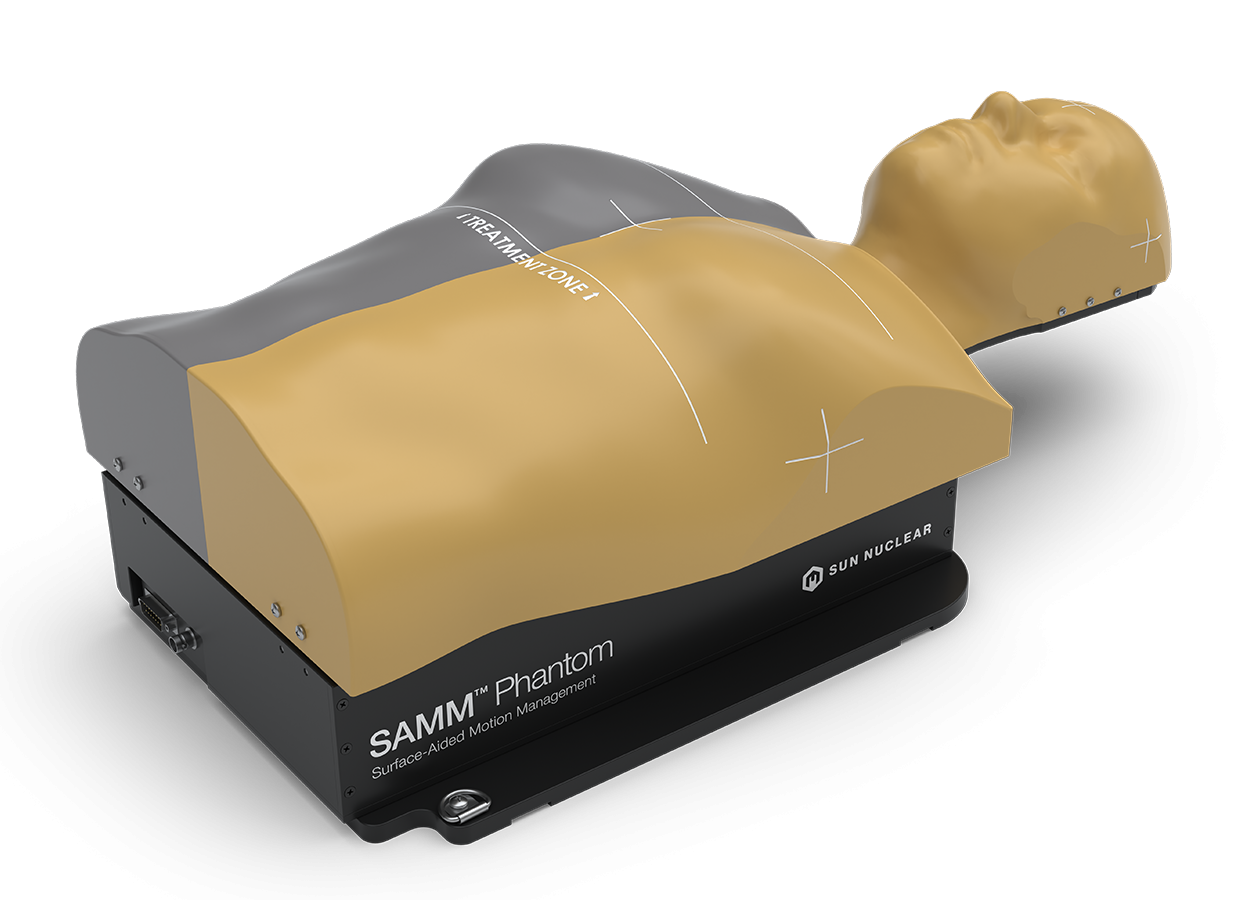
Commissioning complex surface-guided radiation therapy (SGRT) workflows is essential to a modern radiation therapy program and typically requires multiple separate tools. The SAMM (Surface-Aided Motion Management) Phantom brings positioning, motion, dosimetry, and latency testing into one self-contained system, built to support AAPM Task Groups 147 and 302 and ESTRO-ACROP SGRT standards.
All-in-One SGRT QA
- Correlated surface-and-target motion emulates a tumor moving with respiratory patterns.
- Validate detection through beam response in one setup, with no separate vendors’ tools to coordinate or configure.
Task Group & Accreditation Ready
- Complete the SGRT QA tests in AAPM TG-147, TG-302 and ESTRO-ACROP.
- Quantifies beam-on and beam-off response times, addressing temporal accuracy and motion-management testing for beam-latency QA
Clinically Realistic SGRT Testing
- Realistic anatomy and engineered surface materials reflect real clinical and optical tracking performance.
- One surface covers cranial and thoracic workflows, so breath-hold, gating and tracking scenarios validate against the same anatomy.
Features in Focus
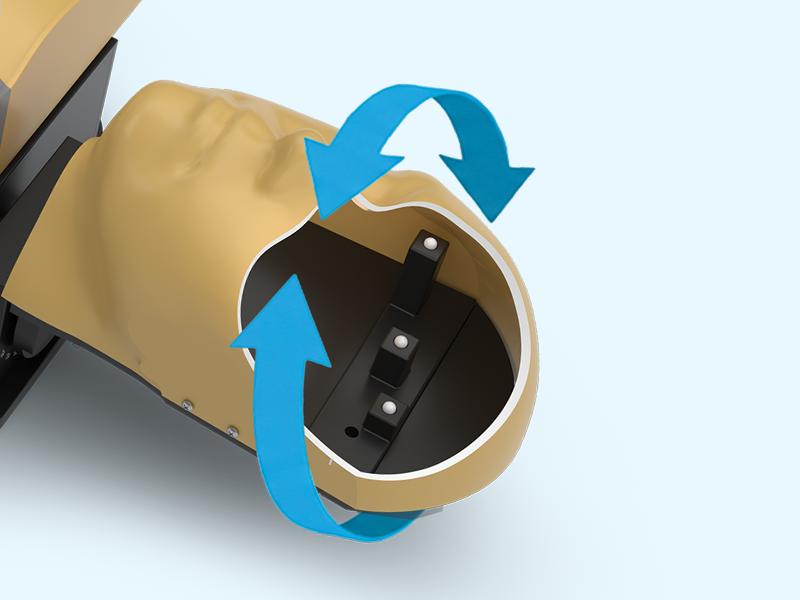
Head Workflows
Test SGRT and IGRT coincidence, rotational setup, and repositioning accuracy. Validate patient repositioning and isocenter recovery throughout the treatment workflow.
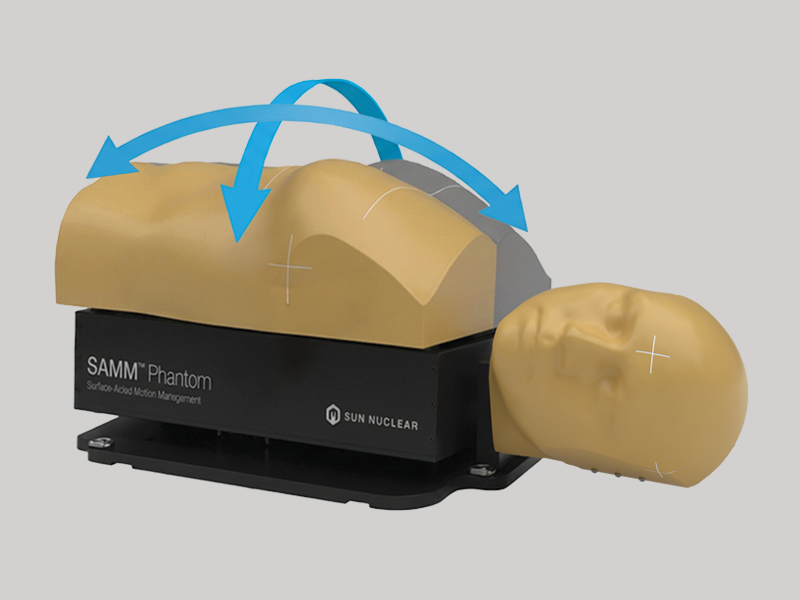
Programmable Respiratory Motion
Commission and QA gating, tracking, and DIBH workflows with repeatable motion scenarios built on common respiratory waveforms and patient-specific breathing patterns.
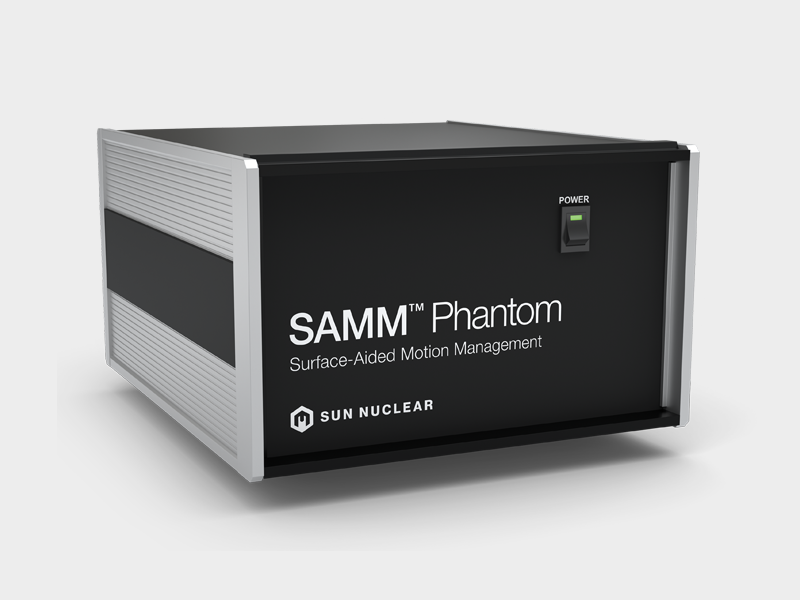
Controller with Integrated Electrometer
Generate motion, measure dose and quantify beam latency from a single platform, with dedicated latency circuitry that isolates and quantifies treatment delivery response time.
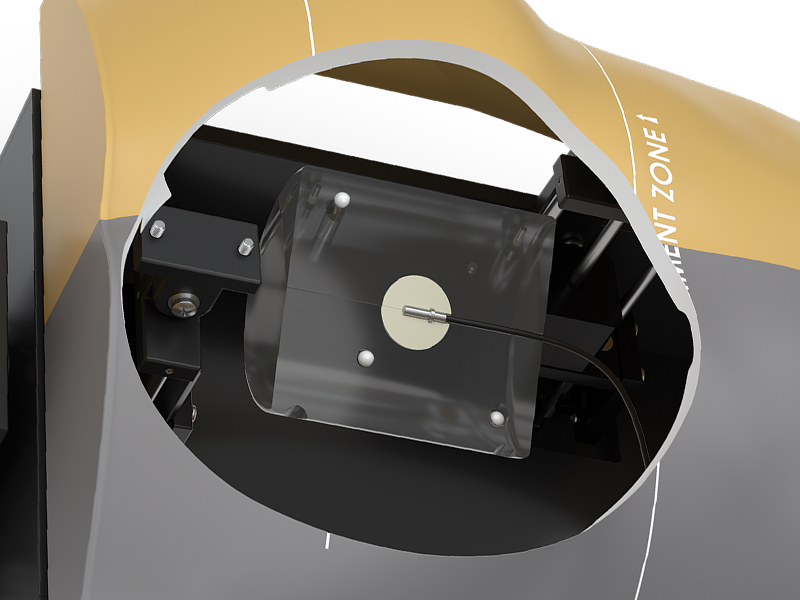
Embedded Diode
Measure dose delivered to a moving target and evaluate beam latency by correlating phantom motion with beam-on and beam-off events during gated delivery.
1Dierl M, et al. Novel approach for determining beam latency using the center of mass of the radiation field measured with a diode detector array. Z Med Phys. Published online June 24, 2025. doi:10.1016/j.zemedi.2025.06.001
Product availability varies by region and is subject to local regulatory approval and distributor arrangements. Please contact your local representative to confirm availability in your market.
Resources

Webinars & Videos

Downloads
Specifications
Phantom Body (Head + Torso) Dimensions: |
28.1" x 13.7" x 9.4" (715 x 350 x 240 mm) |
Phantom Body (Head + Torso) Weight: |
23.2 lbs (11 kg) |
MRI Compatibility: |
MR Unsafe |
Application (included): |
Motion Control |
PC: |
Not Included |
RAM: |
≥ 16 GB |
Hard Drive Space: |
≥ 8 GB |
Operating System: |
Windows 11 Pro; Windows 11 Enterprise |
Display Resolution: |
1920 x 1080p |
| MoreLess | |
Beam off detect time: |
< 23 ms from last radiation pulse |
Detect pulse frequency range: |
60–400 Hz (Linac) |
Detect dose-per-pulse range: |
0.033–5.5 cGy/pulse |
Output signal: |
< 0.3 VDC (beam off); > 9.7 VDC (beam on) |
Overall Dimensions (LxWxH): |
10.7” x 8.5” x 5.8 in (275 x 220 x 150 mm) |
Weight: |
8.6 lbs (4 kg) |
Power: |
110-250VAC, 50/60 Hz (auto-switching) |
Communication Ports: |
|
Motion Drive: |
DB15 (1x) |
Dosimetry: |
Triaxial (1x) |
Latency: |
Coaxial with Triaxial adapter (1x) |
Data 1: |
Ethernet RJ45 |
Data 2: |
PDI 3.0 (or greater) |
Electrometer: |
Included (embedded) |
| MoreLess | |
Reference the SAMM Phantom datasheet for full specifications.

